
Oral Cancer Awareness: Who Is Most at Risk for Oral Cancer?
April 3, 2026 9:00 amMost people don’t walk into a dental appointment thinking about oral cancer. The focus is usually on what you can feel—a sensitive tooth, something catching food, or just staying on track with a cleaning.
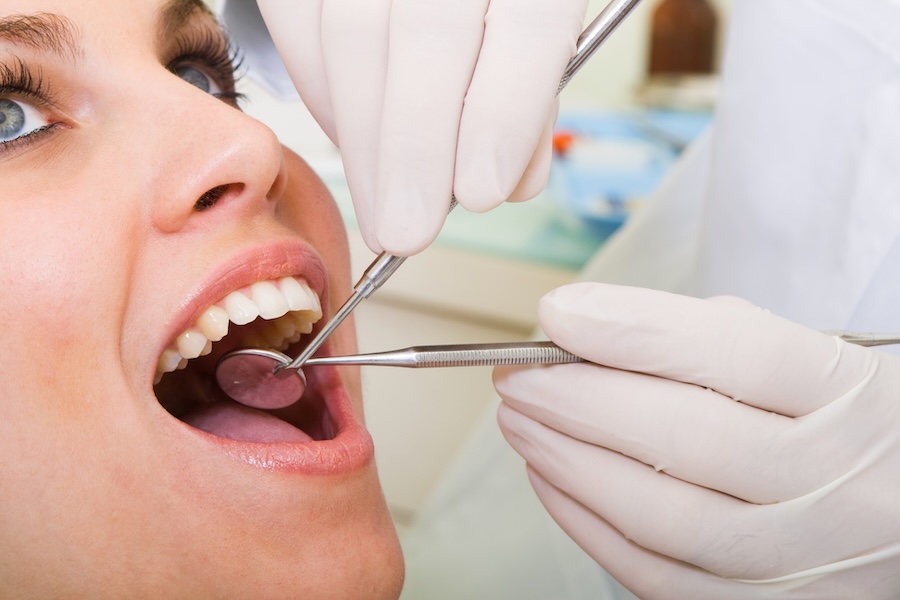
At the same time, part of the visit is spent looking at areas that don’t always draw attention. The sides of the tongue, the cheeks, and the back of the mouth can develop changes without causing pain right away. Because of that, those areas are checked even when everything feels normal.
That’s where oral cancer screenings come in. They’re built into routine care, not treated as something separate, because early changes are often easier to catch when someone is already looking closely.
Oral Cancer Awareness: Why Risk Factors Come Up During a Visit
When questions come up about habits or health history, there’s a reason behind it. Oral cancer doesn’t develop from a single cause, and it doesn’t follow a predictable pattern. In most cases, it’s tied to a combination of factors that build over time rather than one isolated issue.
Understanding those factors helps guide how the exam is done. During a comprehensive dental exam, attention isn’t just on teeth—it includes the surrounding tissues and how they look compared to what’s expected. Having that context makes it easier to notice when something is slightly different, even if it wouldn’t stand out on its own.
Tobacco Use and Its Long-Term Effects
Tobacco continues to be one of the most consistent risk factors associated with oral cancer. Whether it’s smoking or smokeless forms, the tissues in the mouth are exposed repeatedly to irritation and chemical compounds that can affect how cells behave over time.
These changes tend to develop gradually, often in areas like the tongue, the floor of the mouth, or along the cheeks. They don’t always cause symptoms early on, which is why those areas are examined carefully during cleanings and exams, even when nothing feels off.
For patients who have quit, past use still plays a role in how those tissues are monitored. It doesn’t mean something will develop, but it does mean those areas remain part of what we pay attention to during future visits.
Alcohol Use and Combined Risk
Alcohol use also contributes to oral cancer risk, particularly when it’s consistent over time. On its own, it can affect the tissues in the mouth, but when it’s combined with tobacco, the overall risk increases more significantly.
This happens because alcohol can make the tissues more susceptible to irritation, which allows other risk factors to have a stronger effect. That’s why these habits are part of the conversation during a visit—they help provide context for what we’re evaluating during the exam.
HPV and What the Vaccine Helps Prevent
HPV has become a more recognized factor in oral cancer, especially for cancers that develop toward the back of the mouth and throat. This connection is linked to specific high-risk strains of the virus, not HPV as a whole.
The HPV vaccine is designed to protect against the strains most commonly associated with these cancers. It’s typically recommended earlier in life, but understanding what it protects against can help patients and families make more informed decisions.
From a dental standpoint, this is one reason screenings are consistent for all patients. Risk doesn’t always follow the patterns people expect.
Age and Gradual Changes Over Time
Oral cancer is more commonly diagnosed in adults over 40, but it’s not limited to that age group. What changes over time is the amount of exposure the body has had to different risk factors.
Those exposures—whether from tobacco, alcohol, sun, or general wear—tend to build gradually. Because of that, regular visits help establish a baseline. When something changes, it’s easier to recognize when there’s something to compare it to.
Sun Exposure and the Lips
The lips are one of the few areas of the mouth that are regularly exposed to the sun, which makes them more vulnerable than people often realize. Over time, repeated exposure can lead to changes that don’t heal as expected.
This tends to show up more often in patients who spend a lot of time outdoors. During an exam, the lips are included as part of the overall evaluation, especially if there are areas that appear dry, scaly, or different from the surrounding tissue.
Other Factors That Can Contribute
There are also contributing factors that don’t always stand out on their own but still play a role. A weakened immune system can make it harder for the body to respond to abnormal cell changes, and ongoing irritation in the mouth—such as from a rough edge or an ill-fitting restoration—can contribute over time.
These factors are considered alongside everything else during an exam. Oral health isn’t isolated from overall health, and those connections tend to become more relevant the longer they’re present.
What an Oral Cancer Screening Involves
Oral cancer screenings are part of a routine visit and don’t require anything invasive. The process involves a careful visual and physical evaluation of the mouth and surrounding areas.
We’re looking for changes in color, texture, and symmetry—anything that doesn’t match the surrounding tissue. That includes patches, thickened areas, or spots that look different than expected. The jaw and neck are also checked for anything unusual.
Most of the time, everything looks normal. If something stands out, it doesn’t immediately mean cancer, but it does mean we take a closer look, recommend biopsy, or monitor it more closely.
Signs That Should Be Checked
Even with regular screenings, there are things patients may notice on their own. A sore that doesn’t heal, a patch that doesn’t go away, or a change that sticks around longer than expected are all worth having evaluated.
Other signs, such as difficulty swallowing, numbness, or a lump that doesn’t resolve, should also be taken seriously. The timing matters more than anything else. If something hasn’t improved after a couple of weeks, it’s worth having it checked.
Oral Cancer Screenings in Rome, GA at Stillwater Dentistry
At Stillwater Dentistry in Rome, GA, Dr. Saahil Patel and Dr. Christopher Keenan include oral cancer screenings as part of routine care because they’re easy to overlook and important to catch early.
If it’s been a while since your last visit, or if you’ve noticed something that doesn’t feel quite right, scheduling an exam is a straightforward way to take a closer look. Staying consistent with cleanings and exams helps make sure any changes are identified early, when they’re easier to address.
Contact UsCategorised in: Oral Cancer Screenings
 Team
Team Preventive
 Restorative
 Cosmetic
 Invisalign
 Sedation