
Are Clear Aligners Right for Teenagers?
July 17, 2026 9:00 amTeenagers have a lot going on. School, sports, band, part-time jobs, friends, dances, college visits, and a social life that can somehow involve six different group chats at once. Add orthodontic treatment to that mix, and many teens immediately wonder what it will look like in everyday life.
For some, the biggest question is appearance. They may not love the idea of regular braces showing up in school photos, prom pictures, senior portraits, or every selfie for the next year or two. Clear aligners can be appealing because they are less noticeable than brackets and wires, and they can be removed for eating, brushing, and flossing.
That flexibility can be a real advantage for the right teenager. However, clear aligners also ask more from the person wearing them. They need to be worn most of the day, kept clean, stored in a case during meals, and changed on schedule. If the aligners spend more time in a backpack, lunch tray, or hoodie pocket than in the mouth, treatment will not stay on track.
At Stillwater Dentistry in Rome, GA, Dr. Saahil Patel and Dr. Christopher Keenan can help families decide whether clear aligners fit a teen’s teeth, bite, habits, and daily routine. For some teens, aligners make sense. For others, braces may be the better choice.
How Clear Aligners Work
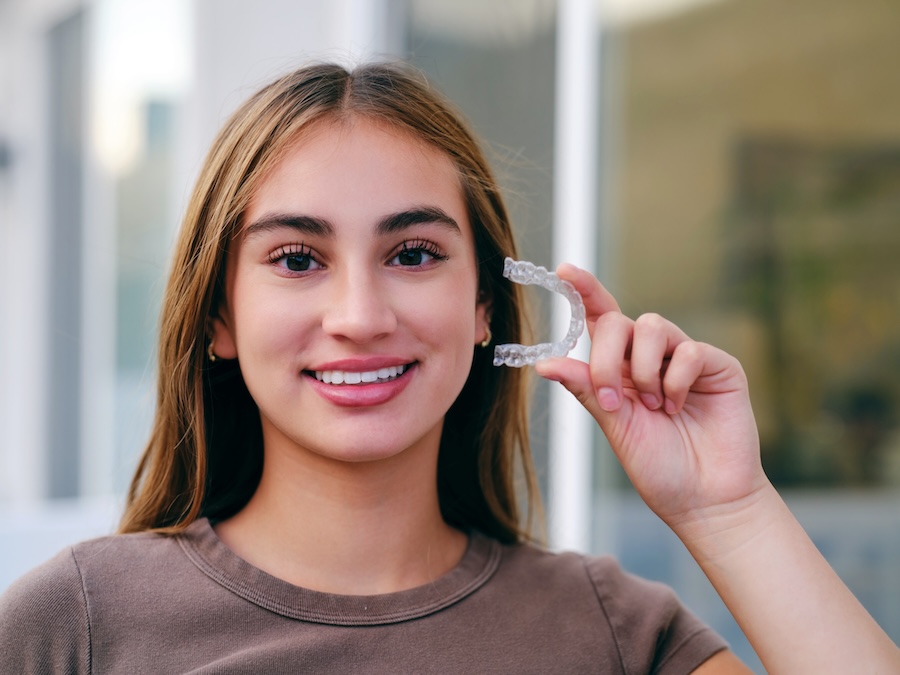
Clear aligners use a series of removable trays to move teeth gradually. Each set is shaped a little differently, guiding the teeth step by step toward their planned positions.
The trays fit over the teeth and are usually worn most of the day and night. They are removed for eating, drinking anything besides water, brushing, and flossing. Then they need to go right back in.
That part sounds simple, but it is where a lot of the real-life difference shows up. Braces stay attached to the teeth all day. Aligners only work when they are being worn.
Teens may receive several sets of aligners at a time and switch to the next set based on the schedule Dr. Patel or Dr. Keenan provides. If a set is lost, skipped, or not worn enough, the teeth may not move as planned, and treatment can slow down.
In some cases, small tooth-colored attachments are placed on the teeth to help the aligners grip and move them more effectively. These attachments are not the same as brackets, but they can make certain movements easier to control.
Why Teenagers Like Clear Aligners
One of the biggest reasons teens like clear aligners is appearance. They are not invisible, but they are less noticeable than traditional braces. For teens who feel self-conscious about school photos, presentations, prom pictures, or everyday conversations, that can make treatment feel easier to accept.
Clear aligners also make eating simpler. Since the trays come out for meals, there are no brackets to work around and fewer food restrictions. Popcorn, apples, sandwiches, and corn on the cob are usually easier to manage than they would be with braces, as long as the aligners are removed first and the teeth are cleaned before the trays go back in.
Brushing and flossing can also feel more normal. Teens do not have to thread floss under wires or brush around brackets. They can clean their teeth directly, which can be helpful for anyone who already tends to rush through nighttime brushing.
There is also a comfort factor. Aligners do not have wires that poke the cheek or brackets that rub the lips. Some pressure is normal when switching to a new set, but many teens find aligners easier to adapt to during school and activities.
The Responsibility Side of Clear Aligners
Clear aligners give teens more freedom, but they also require more follow-through. That is the tradeoff families need to think through before starting.
The trays need to be worn as directed. If they are removed too often or forgotten for long stretches, the teeth will not move the way they should. A teen who takes aligners out for lunch and forgets to put them back in until after school has lost several hours of treatment time in one day. Chewing on aligners is another habit to watch. If a teen is treating the trays like gum during class or homework, the plastic can bend out of shape, and wear time is further reduced.
Aligners also need a safe place during meals. Wrapping them in a napkin is almost always a bad idea. They can easily be thrown away with the lunch trash. Leaving them on a cafeteria tray, in a locker, or loose in a sports bag can lead to lost or damaged trays.
Cleaning is part of the routine too. Food and sugary drinks trapped under aligners can raise the risk of cavities and white spots. Teens need to brush before putting aligners back in when possible, or at least rinse well when brushing is not realistic.
For a responsible teen, this may be manageable. For a teen who regularly loses retainers, forgets water bottles, or needs multiple reminders to brush at night, braces may be less stressful, and effective, for everyone involved.
When Clear Aligners May Work Well for Teens
Clear aligners can work well for many mild to moderate orthodontic concerns. They may be used to treat crowding, spacing, and certain bite issues, depending on how the teeth need to move.
They may be a good fit for teens who are motivated and willing to wear the trays consistently. A teen who wants aligners and understands the commitment may do very well with them.
Aligners can also be helpful for busy schedules. They can make it easier to play certain instruments, participate in sports, and keep teeth clean during treatment. Since there are no brackets or wires, there may be fewer emergency visits for broken hardware.
For teens who already wear retainers well or manage other health routines responsibly, aligners may fit naturally into the day. They know where the case is, they keep track of small items, and they are not likely to leave the trays on a lunch table.
The best way to know is through an evaluation. Dr. Patel or Dr. Keenan can look at the teeth, bite, and growth pattern, then explain whether clear aligners can accomplish the needed movement.
When Braces May Be the Better Choice
Clear aligners are not the right answer for every teen. Some orthodontic problems are easier to treat with braces, especially when more complex tooth movement or bite correction is needed.
Braces may be recommended if teeth need significant rotation, vertical movement, or detailed control that aligners may not handle as predictably. They may also be better for teens with more severe crowding, bite concerns, or teeth that have not fully erupted.
Braces can also be the more practical option for teens who are not ready for the responsibility of removable trays. Since braces stay on the teeth, parents do not have to worry about aligners being lost, forgotten, or left out for hours at a time.
That does not mean braces are the “punishment” option. For many teens, braces are simply the treatment that fits the job better. They can be reliable, efficient, and easier to manage when a removable system would create too many opportunities for treatment to fall behind.
The right choice depends on the teeth, the bite, and the teenager’s habits. A good plan should work in real life, not just look good on paper.
Sports, Band, and Everyday Teen Life
Teenagers do not pause their lives for orthodontic treatment. They still have practice, performances, games, workouts, school lunches, sleepovers, and weekends away. Clear aligners can fit well into that kind of schedule, but the routine needs to be realistic.
For sports, aligners are usually removed if a mouthguard is needed. A protective sports mouthguard should fit properly and should not be worn over aligners unless Dr. Patel or Dr. Keenan gives specific guidance. After practice or a game, the aligners should go back in once the teeth are clean.
For band and choir, aligners may feel strange at first. Some teens adapt quickly, while others need a little time to speak or play comfortably. Since aligners can be removed briefly when needed, they may offer flexibility, but the trays still need to be worn enough hours each day.
School lunches are often the biggest test. The aligners come out, food is eaten, friends are talking, the bell rings, and suddenly the trays are still in the case two class periods later. Building a simple routine around lunch can help prevent that.
A case needs to be part of the routine. Not a napkin. Not a pocket. Not the corner of a backpack with pencil shavings and gum wrappers. A case.
Keeping Teeth Clean With Aligners
Clear aligners cover the teeth closely. That is part of how they move teeth, but it also means food, sugar, and acid can get trapped if the trays go back in over dirty teeth.
Teens should brush after meals before replacing aligners whenever possible. At school or on the go, rinsing the mouth well with water is better than doing nothing until they can brush properly.
Sugary drinks are a common problem. Soda, sweet tea, sports drinks, energy drinks, juice, and flavored coffees should not be sipped while aligners are in. Those drinks can sit under the trays and bathe the teeth in sugar and acid.
Water is the safest drink with aligners in place. If a teen wants something else, the aligners should come out, and the teeth should be cleaned or rinsed before the trays go back in.
Aligners also need to be cleaned daily. Rinsing them, brushing them gently, and storing them in a clean case can help keep them clearer and fresher.
What Parents Can Watch For
Parents do not need to hover over every minute of aligner wear, but it helps to watch for patterns. If trays are often missing, sitting out, or looking too clean after a full school day, they may not be worn enough.
Bad breath, visible plaque, swollen gums, or new white spots on the teeth can also be signs that cleaning needs to improve. Aligners make hygiene easier than braces in some ways, but only if the teen actually brushes and flosses consistently.
Parents can also help by building small systems. Keep extra cases in the car, backpack, sports bag, or bathroom. Set phone reminders if needed. Encourage water with aligners instead of sweet drinks.
The conversation does not have to turn into a daily lecture. In many families, a few practical supports work better than constant reminders.
What the Consultation Looks Like
A consultation for clear aligners starts with an exam of the teeth, gums, and bite. Dr. Patel or Dr. Keenan will look at crowding, spacing, tooth position, jaw growth, and any areas that may need extra attention.
Photos, X-rays, or digital scans may be used to help plan treatment. The team can explain what clear aligners may be able to correct and whether braces may be a better fit.
This visit is also a good time to talk honestly about habits. Does your teen lose things often? Will they wear the trays at school? Are they willing to brush after meals? Do they play sports or instruments that may affect the routine?
Those details help shape the recommendation. The right treatment is not only about straightening teeth. It is also about choosing something your teen can follow through with day after day.
Clear Aligners for Teenagers at Stillwater Dentistry in Rome, GA
Clear aligners can be a good fit for some teenagers, especially those who want a less noticeable treatment option and can handle the responsibility of wearing and caring for removable trays. They can make eating, brushing, flossing, and photos easier, but they only work when they are worn consistently.
At Stillwater Dentistry in Rome, GA, Dr. Saahil Patel and Dr. Christopher Keenan can evaluate your teen’s teeth and bite, explain whether clear aligners make sense, and talk through other orthodontic options if braces would be a better fit. Call Stillwater Dentistry to schedule a consultation and find out which treatment path fits your teen’s smile and routine.
Contact UsCategorised in: Invisalign
 Team
Team Preventive
 Restorative
 Cosmetic
 Invisalign
 Sedation