
How to Fix Gaps, Chips, and Stained Teeth Quickly
June 26, 2026 9:00 amIt does not take a major dental problem to make you feel distracted by your smile. Sometimes it is one chipped edge that catches the light in photos. Sometimes it is a small gap that seems more obvious than it used to. Or maybe your teeth have picked up stains from coffee, tea, red wine, or just the normal wear of the years. None of it may feel like an emergency, but it can still bug you every time you smile.
The good news is that some cosmetic dental concerns can be improved fairly quickly. Depending on what is going on, teeth whitening, dental bonding, enamel shaping, veneers, or replacing old dental work may help make your smile look cleaner, brighter, and more even. Some fixes can happen in one visit. Others take a little more planning, especially when several teeth are involved.
At Stillwater Dentistry in Rome, GA, Dr. Saahil Patel, Dr. Christopher Keenan, and the team help patients figure out what can be improved quickly and what needs a more thoughtful plan. If you have gaps, chips, stains, uneven edges, or older dental work that does not blend in anymore, a cosmetic consultation can help you see what is realistic for your teeth and your timeline.
First, Make Sure It Is Only Cosmetic
Before choosing a quick fix, it helps to know why the tooth looks the way it does. A coffee stain and a cavity can both look like a dark spot, but they do not need the same treatment. A small chip from biting into something hard may be simple to repair, while a chip caused by grinding may need protection so the repair does not keep breaking.
Gaps can have different causes too. Some people naturally have spacing between teeth. Others develop gaps because teeth shift, the bite changes, or gum disease affects the support around the teeth. A quick cosmetic fix may still be possible, but the reason behind the gap affects what should be done.
During a cosmetic consultation, Dr. Patel or Dr. Keenan can check the teeth, gums, bite, enamel, and existing dental work. If the tooth is healthy and the concern is minor, the solution may be simple. If there is decay, a crack, gum inflammation, or heavy grinding, those issues need to be handled before focusing only on appearance.
Whitening Can Brighten Stained Teeth
Teeth whitening is often one of the quickest ways to refresh a smile. It works best on stains from coffee, tea, wine, dark sauces, tobacco, and normal aging. If the stains are on natural enamel and the teeth are healthy, whitening may noticeably improve the shade.
Professional whitening also helps reduce guesswork. Store-bought products can work for some people, but they are not ideal for every mouth. If you already have sensitivity, gum recession, thin enamel, cavities, or older dental work, it is better to know that before whitening.
One thing catches people off guard: whitening only works on natural tooth structure. It will not change the color of crowns, veneers, bonding, bridges, or tooth-colored fillings. If old dental work shows when you smile, whitening the natural teeth may make that dental work stand out more.
Because of that, whitening is often done before cosmetic bonding or replacement dental work. Once the natural teeth are brighter, the dentist can match any new bonding, veneers, or restorations to the updated shade.
Bonding Can Repair Small Chips and Gaps
Dental bonding is a common option for fixing small chips, closing minor gaps, and reshaping uneven edges. It uses tooth-colored composite resin that is placed directly on the tooth, shaped, hardened, and polished. In many cases, bonding can be completed in one visit.
Bonding works well when the changes are small to moderate. It can repair a chipped front tooth, fill a small space between teeth, make a short tooth look more even, or smooth an edge that keeps catching your tongue. Done well, it blends in instead of announcing itself.
Because bonding often requires little or no removal of natural tooth structure, it can be a good choice for patients who want a quick improvement without a more involved treatment. Still, bonding is not as strong as porcelain and can stain over time.
If you grind your teeth, bite your nails, chew ice, or use your teeth as tools, bonding may chip more easily. In that case, Dr. Patel or Dr. Keenan may recommend a nightguard or habit changes to help protect the repair.
Enamel Shaping Can Smooth Uneven Edges
Not every cosmetic fix means adding material to the tooth. Enamel shaping, also called cosmetic contouring, gently reshapes small areas of enamel to smooth a rough edge, soften a tiny point, or help neighboring teeth look more balanced.
This option is best for minor changes. If one tooth has a small jagged spot or an edge that looks slightly uneven, enamel shaping may be enough. It can often be done quickly and may not require numbing.
Enamel shaping has a narrow lane, though. Enamel does not grow back, so only a small amount can be adjusted safely. If a tooth needs more length, width, or coverage, bonding or veneers may be the better route.
Sometimes enamel shaping and bonding are used together. One tooth may be smoothed while another is bonded to close a small gap. Small changes in the right places can make the smile look more even without making it look overdone.
Veneers Can Make a Bigger Change
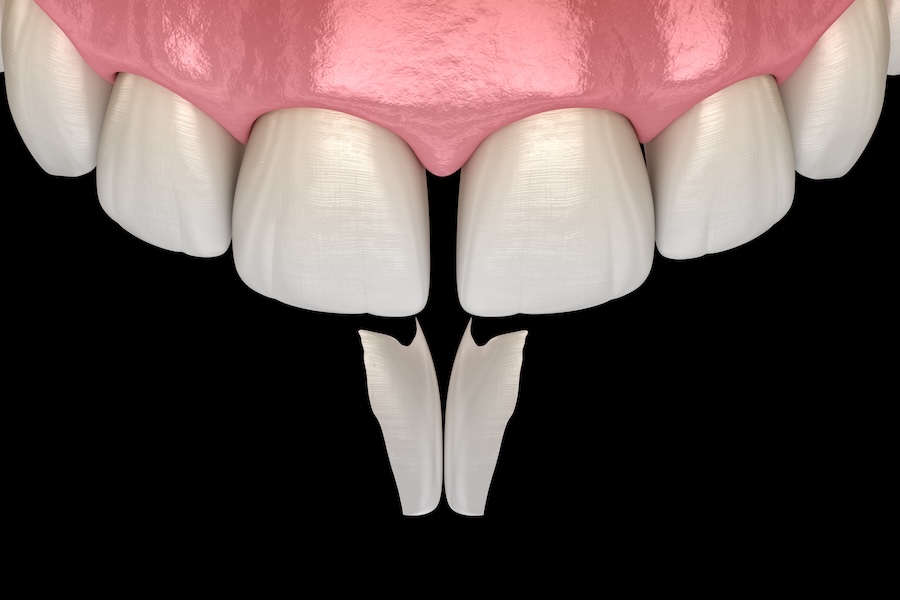
Veneers may be recommended when gaps, chips, stains, or shape concerns are more noticeable. A veneer is a thin covering placed on the front of a tooth to change its color, size, shape, or overall appearance.
Porcelain veneers can be a good option for deeper stains, worn edges, small gaps, uneven shapes, or cosmetic concerns that bonding cannot handle as well. They are more stain-resistant than bonding and can create a stronger, longer-lasting cosmetic result.
Veneers are not usually the same-day fix that bonding can be. They often require planning, tooth preparation, impressions or scans, temporary veneers, and a final placement visit. Even so, they may be worth discussing when you want a larger change.
Healthy gums and a stable bite are important before veneers. If you grind heavily or have gum disease, those issues may need attention first so the final result has a better chance of holding up.
Old Dental Work May Need to Be Replaced
In some cases, the natural tooth is not the main concern. An old crown, filling, bonding, or veneer may no longer match the surrounding teeth. Maybe the natural teeth have changed shade, the restoration has stained, or the gumline has shifted over time.
Whitening will not change the color of dental work, so a mismatched crown or filling may need replacement if it shows when you smile. This is especially common with front teeth, where even a small color difference can be noticeable.
Replacing old dental work can also help when a restoration is chipped, worn, leaking, or shaped poorly. In that case, treatment may improve both appearance and function.
At Stillwater Dentistry, the team can check whether old dental work is still healthy or whether replacement makes sense. If whitening is part of the plan, it is often done first so the new restoration can be matched to the brighter shade.
How Fast Can Treatment Be Done?
The timeline depends on the treatment and the health of the teeth. Small chips, minor gaps, and uneven edges may be improved with bonding or enamel shaping in a single visit. Whitening may also work quickly, depending on the system used, the starting shade, and whether sensitivity needs to be managed.
Veneers and replacement crowns usually take more time because they require planning and lab work. They can still be efficient options, but they are not as quick as simple bonding or contouring.
If you have a deadline, mention it early. Whether you are preparing for photos, travel, a wedding, graduation, or another event, the team can explain what may be possible before that date and what may need more time.
A fast fix should still be a smart fix. If a tooth has decay, a crack, infection, gum disease, or heavy grinding, those concerns should be addressed before cosmetic treatment. Otherwise, the result may not last the way you want it to.
Which Option Fits Your Smile?
If the main concern is tooth color, whitening is often the first option to consider. It is best for natural teeth with surface or age-related stains, especially when the teeth are otherwise healthy.
If the issue is a small chip, uneven edge, or minor gap, bonding may be the better fit. It can change shape and size in a way whitening cannot, and it is often faster than veneers.
For deeper stains, multiple chips, worn teeth, larger gaps, or several teeth that need a more even appearance, veneers may be worth discussing. They take more planning, but they can change color, shape, and symmetry together.
In many cases, the best plan uses more than one treatment. Whitening may come first, then bonding may repair a small chip. A veneer or crown may be used only where the tooth needs more coverage.
Fixing Gaps, Chips, and Stained Teeth in Rome, GA
Gaps, chips, and stained teeth can often be improved faster than patients expect, especially when the teeth and gums are healthy. Whitening can brighten natural enamel, bonding can repair small chips or close minor gaps, enamel shaping can smooth uneven edges, and veneers can create a larger cosmetic change when needed.
At Stillwater Dentistry in Rome, GA, Dr. Saahil Patel, Dr. Christopher Keenan, and the team can help you choose the option that fits your smile, timeline, and dental health. Whether you want to fix one chipped tooth or refresh several teeth before an event, the first step is an exam and a clear plan.
If you want to fix gaps, chips, or stained teeth quickly, schedule a cosmetic consultation with Stillwater Dentistry. The team can explain what can be done soon, what should be treated first, and how to keep your results looking good.
FAQs
What is the fastest way to fix a chipped tooth?
Dental bonding is often one of the fastest ways to fix a small chipped tooth. In many cases, the tooth-colored material can be shaped and polished in one visit, depending on the size of the chip and the health of the tooth.
Can small gaps between teeth be fixed without braces?
Some small gaps can be closed with dental bonding or veneers. If the gap is caused by tooth movement, gum disease, or bite issues, Dr. Patel or Dr. Keenan may recommend addressing those factors first.
What is the quickest way to whiten stained teeth?
Professional whitening may brighten natural teeth more quickly and predictably than many store-bought products. The best option depends on the type of stain, tooth sensitivity, enamel health, and whether you have visible crowns, fillings, or bonding.
Will whitening work on crowns or fillings?
No. Whitening does not change the color of crowns, veneers, bonding, bridges, or tooth-colored fillings. If old dental work no longer matches, replacement may be needed to improve the shade match.
Are veneers faster than bonding?
Bonding is usually faster because it can often be completed in one visit. Veneers take more planning and usually require more than one appointment, but they may be better for larger cosmetic changes.
How do I know which cosmetic option is right for me?
The right option depends on your teeth, gums, bite, timeline, and goals. A cosmetic consultation at Stillwater Dentistry can help determine whether whitening, bonding, enamel shaping, veneers, or replacement dental work makes the most sense.
Contact UsCategorised in: Cosmetic Dentistry
 Team
Team Preventive
 Restorative
 Cosmetic
 Invisalign
 Sedation