
What Happens During a Dental Implant Consultation?
August 28, 2026 9:00 amIf you are thinking about a dental implant, you probably have more questions than answers at first. You may be wondering whether you have enough bone, how long treatment takes, what happens while the area heals, or how the finished tooth will look. A consultation is where Dr. Saahil Patel or Dr. Christopher Keenan can evaluate the area and explain what treatment would actually involve for you.
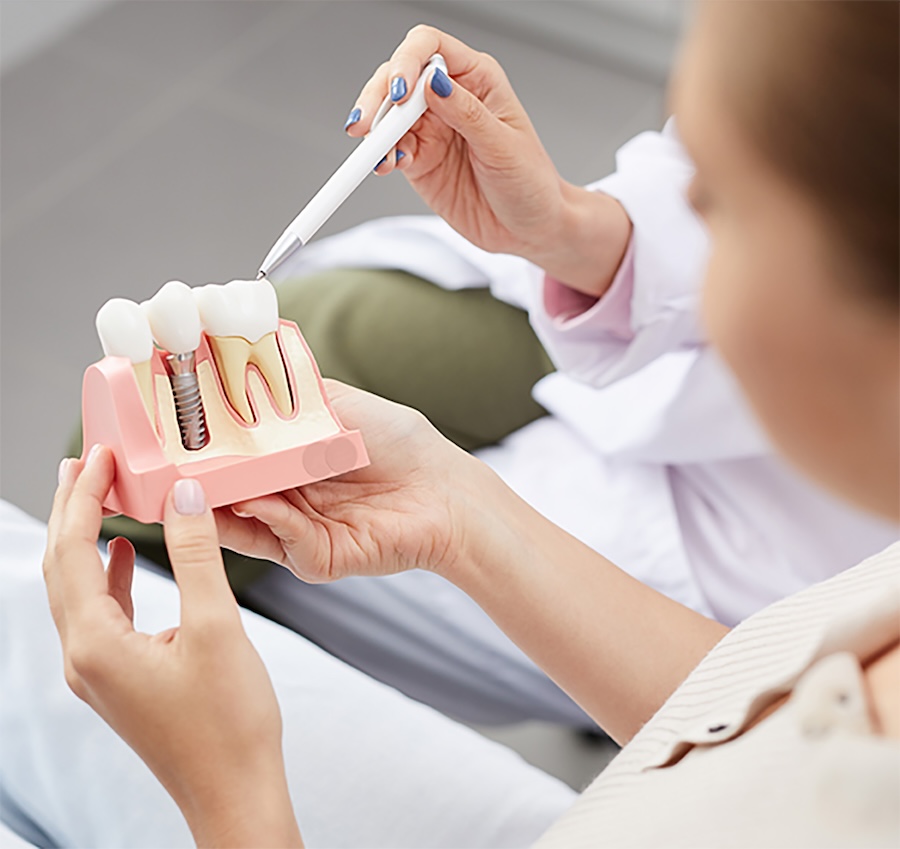
At Stillwater Dentistry in Rome, GA, the visit usually includes a review of your health and dental history, an exam of the missing or failing tooth area, and the imaging needed to evaluate the jawbone. From there, Dr. Patel or Dr. Keenan can discuss whether an implant is a good option, whether anything needs to happen first, and what the likely sequence of treatment will be. Along the way, you can also ask about work, eating, travel, healing, or temporary teeth while the area is being restored.
We Start With What Has Been Happening
The first part of the visit is usually a conversation about why you are considering an implant. Maybe the tooth has already been removed, perhaps it has been missing for years, or you may still have a badly damaged tooth that cannot be saved. Depending on where you are starting, Dr. Patel or Dr. Keenan may need to focus on different things during the exam.
You can also explain what has been bothering you most. Maybe food gets stuck in the space, you avoid chewing on that side, or you are tired of seeing the gap when you smile. If you have a removable partial denture that spends more time in a drawer than in your mouth, mention that too.
A front tooth and a back molar can create very different concerns. With a front tooth, appearance may be high on your list, while a missing molar may be more about chewing comfortably again. Because of that, knowing what you want to improve helps Dr. Patel or Dr. Keenan plan the replacement with those concerns in mind.
Your Health History Is Part of the Plan
Because a dental implant heals in the jawbone, your medical history can affect treatment planning. Dr. Patel or Dr. Keenan will review your medications, medical conditions, previous surgeries, allergies, and any recent changes in your health. If your medication list is long, bringing an updated copy is often easier than trying to remember every name in the chair.
Smoking or tobacco use should be mentioned as well because it can affect healing around an implant. In addition, certain medications and health conditions can influence how bone and gum tissue heal after placement. Dr. Patel or Dr. Keenan will review those details before deciding how treatment should be approached.
Your previous dental treatment can affect the plan as well. If the tooth was removed because of an infection, if you have had gum disease, or if you grind your teeth, let us know. Those details can influence the condition of the bone, the gum tissue, and the way the final restoration is designed.
Next, Dr. Patel or Dr. Keenan Examines the Area
Once the history is reviewed, the dentist will examine the missing tooth area and the teeth around it. They will look at the gums, the amount of space available, and the way your upper and lower teeth come together. If the tooth is still present, they can also confirm whether it needs to be removed or whether another treatment could still save it.
The neighboring teeth also affect how the final crown can be shaped and positioned. There needs to be enough room for the restoration, and the bite has to allow the new tooth to function without taking too much pressure. A space that looks fairly simple when you smile can involve quite a bit more planning once the roots, bone, available room, and bite are all considered.
At the same time, the gums are checked carefully. If there is inflammation, active periodontal disease, or another concern in the area, that may need treatment before implant placement. Healthy gum tissue gives the implant site a better environment for healing and for the final crown later on.
Dental Imaging Helps Evaluate the Jawbone
Because the implant is placed in the jaw, imaging gives Dr. Patel or Dr. Keenan the measurements they need below the gums. Depending on your situation, they may use dental X-rays or three-dimensional imaging to evaluate the bone and nearby structures. As a result, they can see details that are not visible during the clinical exam.
They can look at the height and width of the bone, nearby tooth roots, and other anatomy that may affect where the implant can be placed. If the tooth has been missing for a while, the images can also show whether the ridge has narrowed or changed shape. Those measurements then help determine whether the site is ready for an implant or whether another step may be needed first.
If you recently had dental images taken elsewhere, let Stillwater Dentistry know. The team can review them and decide whether they show what is needed for implant planning. If they do not, updated images can be taken so the plan reflects the current condition of the area.
There Has to Be Enough Bone for the Implant
A dental implant needs bone around it for support, so Dr. Patel or Dr. Keenan will pay close attention to the amount of bone at the site. If the tooth was lost recently and the ridge has stayed fairly full, implant placement may be more straightforward. If the tooth has been gone for years, however, some of that bone may have changed.
When there is not enough bone in the right place, bone grafting may be recommended. In that case, another healing stage may be needed before the implant is placed or before the final crown is completed. The exact sequence depends on how much bone is available and where it is needed.
This is why two people with the same missing tooth can have very different treatment plans. One person may be ready for implant placement fairly soon, while another may need an extraction, grafting, and additional healing first. In other words, the imaging helps Dr. Patel or Dr. Keenan see which situation applies to you before anything is scheduled.
If the Tooth Is Still There, Extraction May Be Part of the Plan
Sometimes you come in for an implant consultation before the failing tooth has been removed. In that case, Dr. Patel or Dr. Keenan can examine the tooth, the roots, and the surrounding bone while also planning ahead for replacement. That can help coordinate the extraction and implant treatment more smoothly.
Depending on the condition of the area, the implant may sometimes be placed around the time the tooth is removed. In other cases, the site needs to heal first. Infection, bone condition, gum health, and the shape of the socket can all influence the timing.
If the tooth is near the front of your smile, temporary replacement options may also be discussed before the extraction. Depending on the case, you may be able to wear a temporary tooth or appliance while the area heals. Dr. Patel or Dr. Keenan can also explain whether that temporary option is mainly for appearance or whether it can handle some chewing.
The Implant Is Only One Part of the Final Tooth
The implant itself sits in the jawbone, but it is not the part you see when you smile. Once the implant has healed, it supports the restoration above it. For one missing tooth, that restoration is usually an implant crown.
If several teeth are missing, implants may support a bridge or another larger restoration instead. Because of that, Dr. Patel or Dr. Keenan will plan not only where the implant goes, but also what it will need to support once treatment is finished. The bite, available space, and position of nearby teeth all influence that design.
The part you are likely thinking about most is the tooth you will actually use every day. So, Dr. Patel or Dr. Keenan can explain how the final crown will fit into your bite, how it will blend with the surrounding teeth, and what you can expect once you are chewing on that side again. That gives you a clearer sense of what the finished restoration will be like in everyday use.
You Will Also Talk About How Long Treatment May Take
Dental implant treatment usually happens in stages because the jawbone needs time to heal around the implant. Depending on your case, treatment may include an extraction, bone grafting, implant placement, healing, and then the final crown. Another person may need fewer steps.
Once Dr. Patel or Dr. Keenan has reviewed the exam and imaging, they can explain the likely sequence. If grafting is needed, that can extend the overall timeline, while a site with good bone may move ahead more directly. Implant treatment follows the biology of healing, which unfortunately has never been very impressed by anyone’s calendar.
If you already have travel plans, a wedding, a busy work season, or another major event coming up, mention it. That information can help you understand where different appointments may fall and whether a temporary tooth needs to be part of the plan. With that in mind, it is much easier to organize treatment around what is already on your calendar.
Grinding and Clenching Can Affect the Final Restoration
If you grind your teeth or clench your jaw, tell Dr. Patel or Dr. Keenan during the consultation. Those forces can affect natural teeth, crowns, and implant restorations, so they need to be considered before the final tooth is designed.
You may already know that you grind because you wake up with sore jaw muscles or someone has heard you doing it at night. In other cases, worn teeth, chipped dental work, or repeated fractures are the first clues. If you already wear a nightguard, bring it with you or mention it.
A beautiful new crown still has to survive breakfast, dinner, and whatever your jaw gets up to while you sleep. Because the implant crown changes the shape of the bite, your existing nightguard may no longer fit correctly once treatment is complete. In many cases, a new nightguard may be needed so it fits comfortably around the new restoration.
You Can Ask About Eating, Healing, and Everyday Life
Once Dr. Patel or Dr. Keenan has examined the area and reviewed the imaging, you can get into the questions that tend to come up outside the dental chair. You may want to know when you can chew normally again, how sore the area may be after placement, how many visits are involved, or whether you will have a temporary tooth during healing.
If the surgical appointment is the part you are most concerned about, ask what happens step by step. Dr. Patel or Dr. Keenan can explain how the area is numbed, what you may feel during the procedure, and what the first few days afterward are usually like. On the other hand, if appearance is your bigger concern, you can spend more time talking about the temporary and final restorations.
Cost and insurance can be discussed too. Since implant treatment often includes several stages, the estimate may include more than one procedure or component. Going over the plan before treatment starts can make it easier to see which part of the estimate belongs to which stage.
An Implant May Not Be the Only Option
A dental implant can be an excellent way to replace a missing tooth, but it is not the only option. Depending on the location of the gap, the condition of neighboring teeth, your bite, and your preferences, a bridge or removable restoration may also be discussed.
Sometimes another dental issue needs attention first. Gum treatment, removal of a failing tooth, management of infection, or bone grafting may need to happen before implant placement. In other cases, the site may already be ready to move ahead.
Dr. Patel or Dr. Keenan can compare the options with you and explain how each one would work in your mouth. For example, some people care most about having a fixed replacement, while others are more focused on treatment time or avoiding work on neighboring teeth. Those preferences can help narrow down which option fits best.
Dental Implant Consultations at Stillwater Dentistry in Rome, GA
If you are missing a tooth, have a tooth that may need to be removed, or are tired of chewing around the same gap, a dental implant consultation can help you find out what is possible. Dr. Saahil Patel and Dr. Christopher Keenan can examine the area, review the necessary imaging, evaluate the bone and gums, and explain what would need to happen before and after implant placement.
During the visit, be ready to talk about more than the missing tooth itself. Mention any health changes, grinding, previous infection, upcoming travel, or concerns about eating and temporary teeth. The more Dr. Patel or Dr. Keenan knows about the area and your routine, the more specific the treatment plan can be.
If you are ready to find out whether a dental implant could replace a missing or failing tooth, schedule a consultation with Stillwater Dentistry in Rome. Dr. Patel, Dr. Keenan, and our team would be glad to welcome you in, answer your questions, and help you plan the next step!
Contact UsCategorised in: Dental Implants
 Team
Team Preventive
 Restorative
 Cosmetic
 Invisalign
 Sedation