
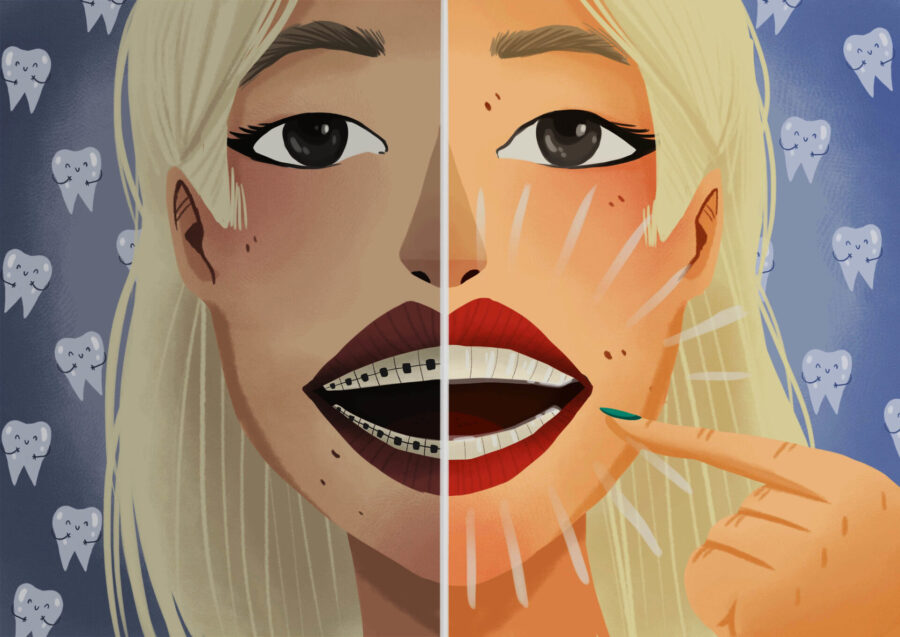
The Top Benefits of Invisalign Compared to Traditional Braces
August 21, 2026 9:00 amStraightening your teeth is not just about how your smile looks at the end. Treatment follows you to work, school, dinner, vacations, photos, sports, and all the ordinary moments in between. So, when you are comparing Invisalign with traditional braces, the day-to-day experience deserves just as much attention as the final result.
At Stillwater Dentistry in Rome, GA, Dr. Saahil Patel and Dr. Christopher Keenan can evaluate whether Invisalign fits your teeth, bite, and treatment goals. Instead of brackets and wires attached to the teeth, Invisalign uses a series of clear, removable aligners that gradually guide teeth into new positions. Traditional braces still have an important role, especially for certain orthodontic needs, but Invisalign can make many parts of treatment feel less intrusive in everyday life.
Invisalign Is Much Less Noticeable
Invisalign aligners fit closely over the teeth and are designed to blend into your smile, so they tend to attract far less attention than metal brackets and wires. You will still know they are there, but they usually do not become the first thing someone notices when you talk, laugh, or smile for a photo.
That can be appealing for adults who spend their days meeting clients, giving presentations, or showing up on video calls. Teenagers may appreciate it too, especially around school pictures, dances, and other events when they would rather have their smile stand out instead of their orthodontic treatment.
Because the aligners are clear, there is also less of a visual adjustment when treatment begins. You are still straightening your teeth every day, but your smile continues to look much like your own along the way.
Meals Stay Much More Familiar
Traditional braces stay attached to your teeth, so eating comes with a few extra rules. Hard, sticky, and very crunchy foods can damage brackets or wires, which means certain snacks and meals need a little more thought.
With Invisalign, you remove the aligners before eating. As a result, corn on the cob, crunchy vegetables, sandwiches, and plenty of other familiar foods can usually stay on the menu. You do not have to inspect every bite for something that might pull on a bracket.
After you eat, though, the trays need to go back in. Ideally, you will brush before putting them back, and you will want to keep the aligners in for the amount of time recommended by Dr. Patel or Dr. Keenan. Removable is convenient, but the trays cannot do much straightening from the bottom of a backpack or beside the kitchen sink.
Brushing and Flossing Are Less Complicated
The ability to remove Invisalign trays also changes your brushing and flossing routine. With braces, you have to clean carefully around brackets and underneath wires, and flossing can require threaders or other small tools. It becomes a new skill rather than the routine you already know.
With Invisalign, the trays come out, so you can brush and floss your teeth much as you normally would. That can make it easier to reach the gumline, clean between the teeth, and see whether you missed an area. Then, once your teeth are clean, the aligners go back in.
The trays need cleaning too, of course. Dr. Patel or Dr. Keenan can show you how to care for them without scratching or warping the material. Keeping both your teeth and trays clean also prevents yesterday’s lunch from spending the afternoon tucked underneath an aligner.
There Are No Brackets or Wires Rubbing Your Mouth
Traditional braces use brackets and wires to create tooth movement, and those parts can occasionally rub the cheeks or lips. If a wire shifts or starts poking, one tiny spot can become very hard to ignore by the end of the day.
Invisalign trays have smooth surfaces and do not rely on traditional wires. You may still feel pressure or tenderness when you move into a new set because the teeth are being guided into different positions. However, there is no loose wire waiting to introduce itself to the inside of your cheek.
An aligner edge can occasionally feel irritating, especially when a new tray first goes in. If an area keeps rubbing or feels unusually sharp, let us know rather than trimming or reshaping the tray yourself. We can check the fit and make sure the aligner is seating the way it should.
You Have More Flexibility for Sports and Special Events
Invisalign should be worn consistently, but the fact that the aligners are removable gives you some flexibility when life calls for something different. For example, if you play a sport that requires an athletic mouthguard, the trays can come out before practice or a game so you can wear the appropriate protection instead.
Afterward, rinse your mouth, clean your teeth as needed, and put the aligners back in so you stay within the usual wear schedule. That makes it easier to switch from orthodontic treatment to sports protection without trying to fit one appliance awkwardly over another.
The same flexibility can help during meals at weddings, formal events, or other occasions. Still, those breaks should stay brief. “I took them out for dinner” can turn into “I found them beside the coffee maker the next morning” surprisingly fast, so keeping the case nearby is a good habit.
Your Invisalign Plan Starts With ClinCheck Software
Before you begin wearing Invisalign trays, Dr. Patel or Dr. Keenan can use ClinCheck software to plan the movement of your teeth digitally. The software maps out how the teeth are expected to shift through the different stages of aligner treatment. Instead of being handed a stack of trays with no idea where things are headed, you can see how the plan is being built.
ClinCheck can also help you visualize the intended progression of your smile before you finish treatment. You may be able to see how a crowded front tooth is expected to straighten, where space will be created, or how several small movements work together. Seeing those stages laid out can make it much easier to understand what the aligners are actually working toward.
Of course, teeth are part of a living mouth rather than pieces moving across a computer screen. Regular visits still play an important role because Dr. Patel or Dr. Keenan can compare your actual progress with the ClinCheck plan and see whether refinements or other adjustments are needed along the way.
Invisalign Appointments Feel Easy
With braces, orthodontic visits often involve adjusting wires, checking brackets, and making repairs when hardware breaks. Invisalign visits tend to focus more on how the trays are fitting and whether the teeth are tracking with the planned movements.
You will move through a series of aligners at home according to the schedule you receive. Then, at follow-up visits, Dr. Patel or Dr. Keenan can check how your bite is changing, whether attachments are doing their job, and whether you are ready to continue through the next stage.
Invisalign is not a set-it-and-forget-it treatment. The trays handle much of the daily work, while your dental visits keep the plan connected to what your teeth are actually doing. If something starts drifting off course, it is better to catch it while the change is still small.
Invisalign Can Fit a Busy Routine Well
Once you settle into the routine, Invisalign tends to move through the day fairly quietly. You wear the trays while working, studying, driving, sleeping, and going about most of your normal activities. Then they come out for meals, brushing, and the occasional situation where another appliance, such as a sports mouthguard, needs to take over.
A little organization also helps the routine stay easy. Keep an aligner case with you rather than wrapping the trays in a napkin during lunch. Clear aligners have an unfortunate talent for disappearing into a restaurant table right before someone clears the dishes.
You may also discover a few things about your own habits. Frequent snacking becomes much more noticeable when the trays have to come out each time, and keeping a toothbrush handy starts to feel like a very good idea. The routine changes a little, but it does not have to rearrange your whole day.
The Removable Part Comes With Responsibility
The fact that Invisalign is removable can make treatment more flexible, but it also means the trays have to spend enough time on your teeth to work. Braces stay in place all day, while Invisalign depends on you putting the aligners back in after meals, brushing, sports, and other short breaks.
If the aligners regularly stay out for long stretches, the teeth may not move as planned. Then the next tray may feel unusually tight or may not fit correctly because the teeth have not reached the position expected at that stage. Consistency helps each aligner pick up where the last one left off.
For teenagers, it is worth thinking about how well they handle things they need to keep track of. Some teens are extremely organized, while others can misplace a phone charger while it is still plugged into the wall. Dr. Patel or Dr. Keenan can help you decide whether removable aligners fit the habits of the person who will actually be wearing them.
Traditional Braces May Still Be Better for Some Smiles
Invisalign offers a lot of day-to-day advantages, but traditional braces are still an excellent treatment. Certain bite problems, complicated tooth movements, or other orthodontic situations may be handled more predictably with fixed brackets and wires.
Braces can also be a better fit for someone who would struggle to wear removable trays consistently. Since they stay attached, there is no remembering to put them back after lunch and no aligner case to keep track of. For some people, that built-in consistency is actually a benefit.
Dr. Patel or Dr. Keenan can look at your bite, crowding, spacing, tooth position, and overall dental health before recommending one approach. If Invisalign can accomplish the movements you need, then appearance, eating, cleaning, sports, and daily habits become part of choosing between the two.
What Daily Life With Invisalign Actually Looks Like
Most days settle into a pretty manageable rhythm. You wear the trays throughout the day and while sleeping, remove them for meals, brush and floss, clean the aligners, and put them back in. Then, according to your treatment schedule, you move to the next set and continue the process.
A new tray can feel snug for the first day or two, especially around teeth that are beginning a new movement. That pressure usually becomes less noticeable as the teeth adjust to the aligner. Before long, the tray feels familiar and another set is waiting in the box.
You also develop your own little Invisalign habits. The case earns a permanent spot in your bag, brushing after lunch becomes much more automatic, and you stop trusting napkins as temporary aligner storage. Before long, the routine feels less like something you have to think through and more like one more part of the day.
Invisalign at Stillwater Dentistry in Rome, GA
If you want straighter teeth but would rather avoid brackets, wires, food restrictions, and a completely different flossing routine, Invisalign may fit what you are looking for. Dr. Saahil Patel and Dr. Christopher Keenan can evaluate your teeth and bite, show you how Invisalign could approach the changes you want, and use ClinCheck software to map out the planned movement before treatment begins.
At Stillwater Dentistry in Rome, GA, we can also talk through the parts that affect real life: how often the trays come out, how to handle meals and sports, what happens if an aligner feels off, and whether you are likely to stay consistent with wear. Invisalign works best when the treatment plan fits both the smile and the person wearing the trays. We can also see what dental insurance coverage you have for clear aligners.
If you are curious how clear aligners would fit into your own routine, schedule an Invisalign consultation with Stillwater Dentistry. We would love to welcome you in, take a closer look at your smile, and help you decide whether Invisalign is the right fit for you!
Contact UsImage from Authority Dental under CC 2.0
Categorised in: Invisalign
 Team
Team Preventive
 Restorative
 Cosmetic
 Invisalign
 Sedation